10 Ways to Identify Vintage Gold (Not Vintage Trash)

Updated: Sep 29

Because old doesn't automatically mean valuable, and sometimes ugly really is just ugly.
10 Ways to Identify Vintage Finds
There is a particular kind of confidence that comes from walking into a thrift store, spotting something tucked behind three questionable lamps and a ceramic rooster, and thinking:
Wait a minute.
That's the thrill of vintage hunting.
But here's the problem: thrift stores, flea markets, estate sales, and antique malls are filled with old things. And old and valuable are not the same thing.
Some pieces have craftsmanship, history, collectibility, or incredible decorating potential.
Others have survived a very long time.
So how do you learn the difference?
You develop your eye.
Here are 10 things I look for when deciding whether I've found vintage gold or vintage trash.
1. Pick It Up
Seriously.
One of the first things I do when something catches my eye is pick it up.
Older glassware, pottery, hardware, frames, lamps, and decorative objects often have a different weight and feel than inexpensive modern reproductions.
A brass candlestick may feel surprisingly substantial. An older ceramic piece might have a thick, sturdy base. Vintage glass can feel heavier or slightly different from today's mass-produced versions.
Weight alone doesn't prove age or value, but it gives you information.
And when you're thrifting, you're collecting clues.
Eloise Tip: Don't just shop with your eyes. Vintage hunting is surprisingly tactile. Pick things up, turn them over, feel the material, inspect the construction.
2. Turn It Over
The bottom may be more interesting than the top.
Before putting a piece in your cart, flip it over and look underneath.
You may find a manufacturer's mark, pottery stamp, country of origin, signature, model number, pattern name, patent information, old label, or other clue that tells you exactly what you're holding.
Even when you don't recognize the mark, photograph it.
That tiny stamp underneath a $6 vase could be the beginning of a very interesting Google search.
But don't panic if there's no mark. Plenty of older pieces were unmarked.
A mark is evidence, not the only evidence.
3. Look at How It Was Made
This is where your vintage eye really starts developing.
Modern mass production tends to create objects that are extremely uniform. Older handmade and semi-handmade pieces often reveal evidence of the person or process that created them.
Look for things like hand-cut dovetail joints on furniture, tiny irregularities in pottery, tool marks, hand-painted details, older screws and nails, seams in glass, hand stitching, substantial hardware, or construction techniques that would be unnecessarily expensive in a cheap modern product.
Those little imperfections aren't necessarily flaws.
Sometimes they're fingerprints of craftsmanship.
4. Learn the Difference Between Patina and Damage
This one matters.
Patina tells a story. Damage creates a problem.
A little tarnish on old brass? Beautiful.
Soft wear on the edges of an old wooden table? Character.
Slight crazing on antique pottery? Potentially charming.
Active mold, serious cracks, missing structural pieces, deep water damage, unstable furniture, strong odors, or an infestation?
That's not patina.
That's a project.
And unless you specifically want a restoration project, leave somebody else's adventure right there on the shelf.
Vintage pieces do not have to be perfect. In fact, I often prefer when they aren't.
But there is a difference between beautifully aged and barely surviving.

5. Examine the Materials
Materials can tell you a lot.
Solid wood behaves differently from particleboard. Brass feels different from lightweight plated metal. Linen has a different texture from polyester. Older glass may contain bubbles or subtle irregularities.
Start learning materials rather than memorizing thousands of vintage brands.
Can you recognize solid wood?
Real brass?
Crystal?
Stoneware?
Silver plate?
Natural fibers?
Hand-blown glass?
The better you become at recognizing materials, the less dependent you'll be on labels.
And that's when thrifting becomes really fun.
6. Look for Quality Where Nobody Was Supposed to Look
One of my favorite clues is craftsmanship in hidden places.
Open the drawer.
Look underneath the table.
Check the back of the frame.
Inspect the inside of the cabinet.
Look at the stitching inside the garment.
Quality pieces were often constructed well even in places the owner wasn't expected to see every day.
Cheap pieces tend to reveal themselves quickly once you stop looking only at the pretty side.
Think of it as the vintage equivalent of checking someone's references.
7. Don't Let a Famous Name Do All the Thinking
Yes, makers matter.
Certain manufacturers, designers, artists, pottery houses, furniture makers, and brands are highly collectible.
But a recognizable name doesn't automatically make something valuable, and an unfamiliar name doesn't make something worthless.
Condition, rarity, age, demand, material, design, provenance, and current market interest all matter.
And here's another important distinction:
Price is not the same as value.
Someone can put $125 on an old lamp.
That does not mean it's a $125 lamp.
The market gets a vote.
8. Ask Yourself: Is It Actually Beautiful?
This sounds almost too simple, but it's one of my biggest rules.
Forget the label for a second.
Forget whether TikTok says it's trending.
Forget whether somebody online sold one for $400.
Do you actually like it?
Would you put it in your home?
Does the shape catch your eye?
Is the color beautiful?
Does it have character?
Could you imagine it styled on a bookshelf, filled with flowers, sitting beside your bed, or becoming part of a tablescape?
Sometimes the best thrift-store find isn't valuable because a collector wants it.
It's valuable because you know exactly what to do with it.
9. Check What It Actually Sells For
This can save you from a lot of imaginary wealth.
If you think you've found something collectible, search for the exact item—or something very similar—and look for completed or sold prices whenever possible.
There is an enormous difference between:
Listed for $300
and
Sold for $300.
People can ask whatever they want.
Sold prices tell you what someone was actually willing to pay.
Search using the maker, markings, material, approximate decade, color, pattern, and object type.
Instead of searching:
old blue vase
try:
blue ceramic vase stamped Italy vintage
Better clues create better searches.
10. Train Your Eye Before You Train Your Shopping Cart
This may be the most important one.
The best vintage hunters aren't necessarily people who know everything.
They're people who notice things.
Spend time looking at antique furniture, old pottery, vintage linens, historic interiors, museum collections, estate-sale listings, auction catalogs, old decorating books, and reputable vintage sellers.
Eventually, something interesting happens.
You walk into a thrift store, and an object catches your eye before you even know why.
The shape looks different.
The material feels better.
The construction seems unusual.
The color belongs to another era.
You turn it over...
And there it is.
A mark.
That's your eye developing.
And no app can completely replace it.
The Eloise Rule: Would I Still Love It If It Were Worth Nothing?
This is my favorite test.
Imagine you bring home that wonderful little thrift-store find, research it, and discover...
It's worth exactly what you paid for it.
Maybe less.
Do you still love it?
If the answer is yes, you probably didn't make a bad purchase.
Because unless you're buying specifically for resale, your home doesn't need to become a museum of objects other people have declared valuable.
It should be filled with things that make you stop and look twice.
A beautiful old frame.
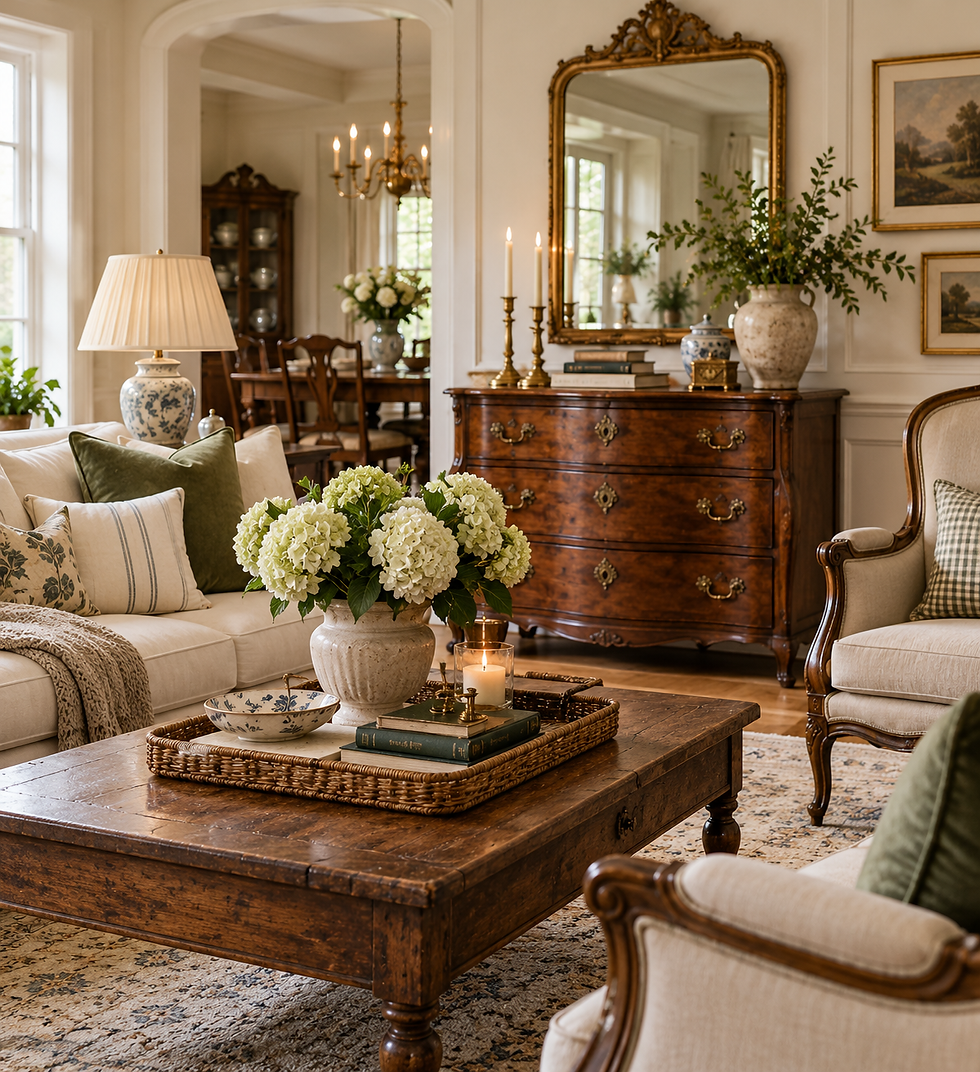
A slightly tarnished brass candlestick.
A stack of worn books.
A strange little painting that nobody else wanted.
A pitcher that becomes a vase.
A bowl that somehow makes apples look sophisticated.
That's where vintage decorating becomes personal.
You're not simply collecting old things.
You're collecting pieces with another chapter left in them.
And sometimes, if you're lucky, you'll spot one buried behind three questionable lamps and a ceramic rooster.
Pick it up.
Turn it over.
You may have just found gold.

A Little Slice of the Pie
The next time you go thrifting, don't try to find ten things.
Try to find one thing worth noticing.
Pick it up. Turn it over. Examine how it was made. Research the mark. Think about where you would put it.
Even if you leave without buying anything, you've trained your eye.
And a good eye will eventually find what everyone else walked right past.
10 Ways to Identify Vintage Finds


Comments